Finding out what it's like
on arthur russell and risking ur life away

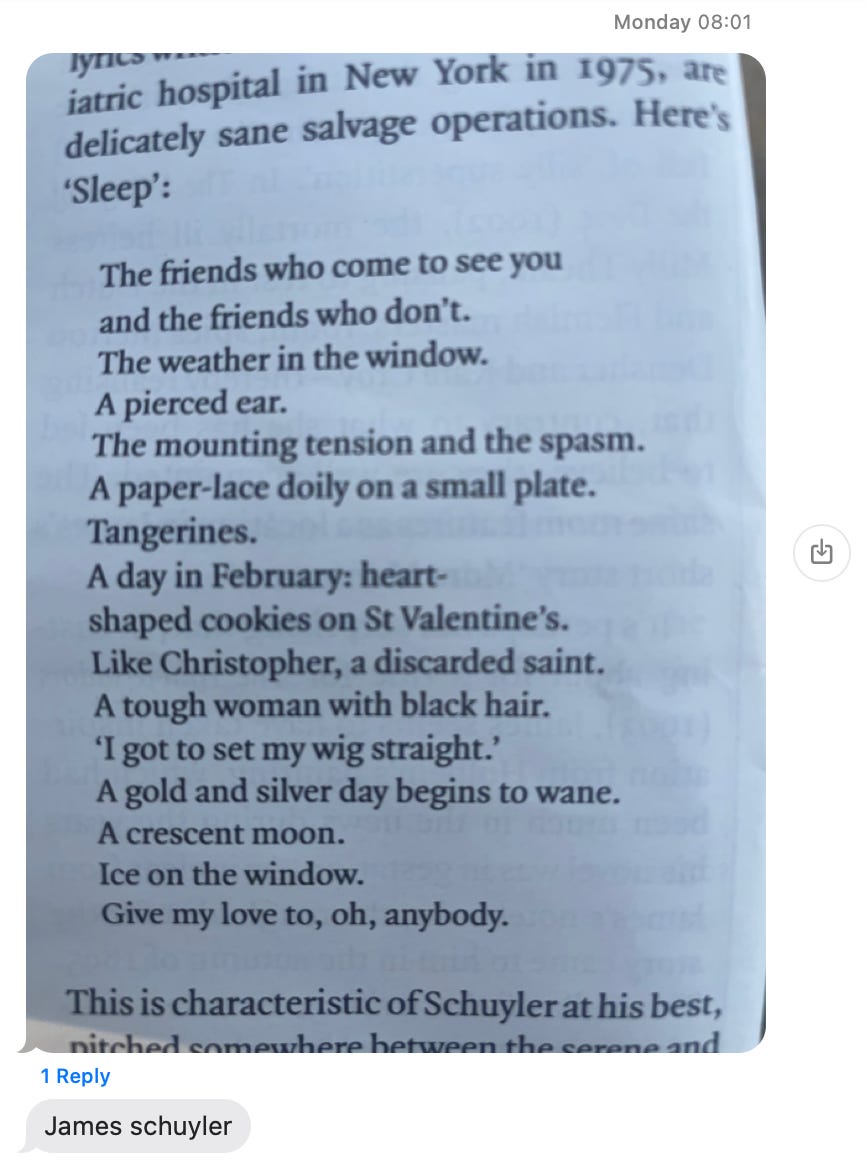
Again, I have been learning about myself by slobbishly sliding up against the boundary wall of my desire. This wall should be made of brick but it’s got a meaty grit to it, like when chicken cartilage finds its way amongst the bone you’re gnawing through.
This is not the first time I have encountered myself this way — it certainly won’t be the last. When the body is at the extremes of its wants, a breaching takes place. It requires a fantastical letting-go of logic, the killing of a rationale invested in efficiency, sometimes even, the repression of a psychic truth. I often find myself dislocated in this urgency; any sure sense of self becomes hole-punched by the intrigue of that which is unknown to me. I don’t eat. I nap during the day. I daydream. I can’t pay my bills or clean my room or do my laundry because to do so wrenches me out of whatever fantasy I’ve deployed myself into. I forget the temporality of this desire — that is, the fact that it is temporary, likely to dissipate in a few days of good-hearted seclusion. I always believe in an infinity.
The condition of my desire begins with the curiosity to know what is on the other side. I want to disrupt the routine of my living and risk getting caught in the snares of experience. What if I cut through the boundary wall, crunched through the cartilage so it was gristle between my molars? Swallowed it. What would be awaiting me? If I risked my life away?
Arthur Russell’s song, ‘What It’s Like’, begins in the dryness of the American Midwest:
In Iowa, in the tall grass, there’s a couple
She’s very young, and he’s a young preacher
And every day they would go out
To the fields where nothing is planted
And lie in the tall grass
But one day he called her into the sanctuary
And he said
‘Kate, I’ve been touched by the Lord
I don’t need you any more’
And she didn’t know what to think
But she loved the Lord
So she just leaned back in the pew
And thought about the tall grass and said
‘Reverend.’
She said, ‘Reverend’
‘Reverend, the only reason I did it was to find out what it’s like’
The lanky, wild grass of the prairie is the initial site of discovery for the couple, where sexual desire is afforded the ability to burst open and free, without boundary or loss. A revelation forged within the heat of another as the spasms of lust configure the body into new, unseen shapes.
In ‘What It’s Like’, a longing for the ideal-other immobilises the body in a state of want. God is just as much a lover as Kate’s preacher-boy. From whose point-of-view is the song registering from?
Arthur’s scene echoes one from the film Midnight Cowboy (1969) when Joe and his Texan lover, Annie, passionately embrace amongst the yellow straw of the South, until the scene is broken by the horror of their assault. Annie’s voice never stops repeating, in the hushed whispers of pleasure: “Do you love me, Joe? Do you love me? Do you love me? You’re the only one, Joe. You’re the only one”.
When I was twenty, I fell in love rather messily without much self-sufficiency or purpose other than to love that which loved me too. The overwhelming, addictive, restlessly new expansion of my body propelled me forwards—and maintaining this expansion, stretching myself further and further until I rounded out like bubblegum, mattered most in my primary perceptions of a true love affair. Finding out what it’s like. What anything is like. Misrecognising the desire before me, sometimes recognising it splendidly so, loving with the might of a lion, sometimes being crushed by the disaster of myself. There’s no poetic way to usher Arthur Russell into this piece without being clumsy with the meaning I give him. During that time, I lucidly played ‘What It’s Like’ everyday. Hoping for some sort of satisfying cathexis.
The cold of that winter felt slick and exciting. I loved the fresh nip on my nose. I turned purple from frostbite. Or was it from holding my breath? The instances before admission felt the most powerful—toying with secrecy, not knowing that the secret is being sustained by two, not just one. Lying your way through friendship, until the watershed takes place—a confession—the hot-bang-sick-smack. Pulverised, you.
What now? Oh, but to love.
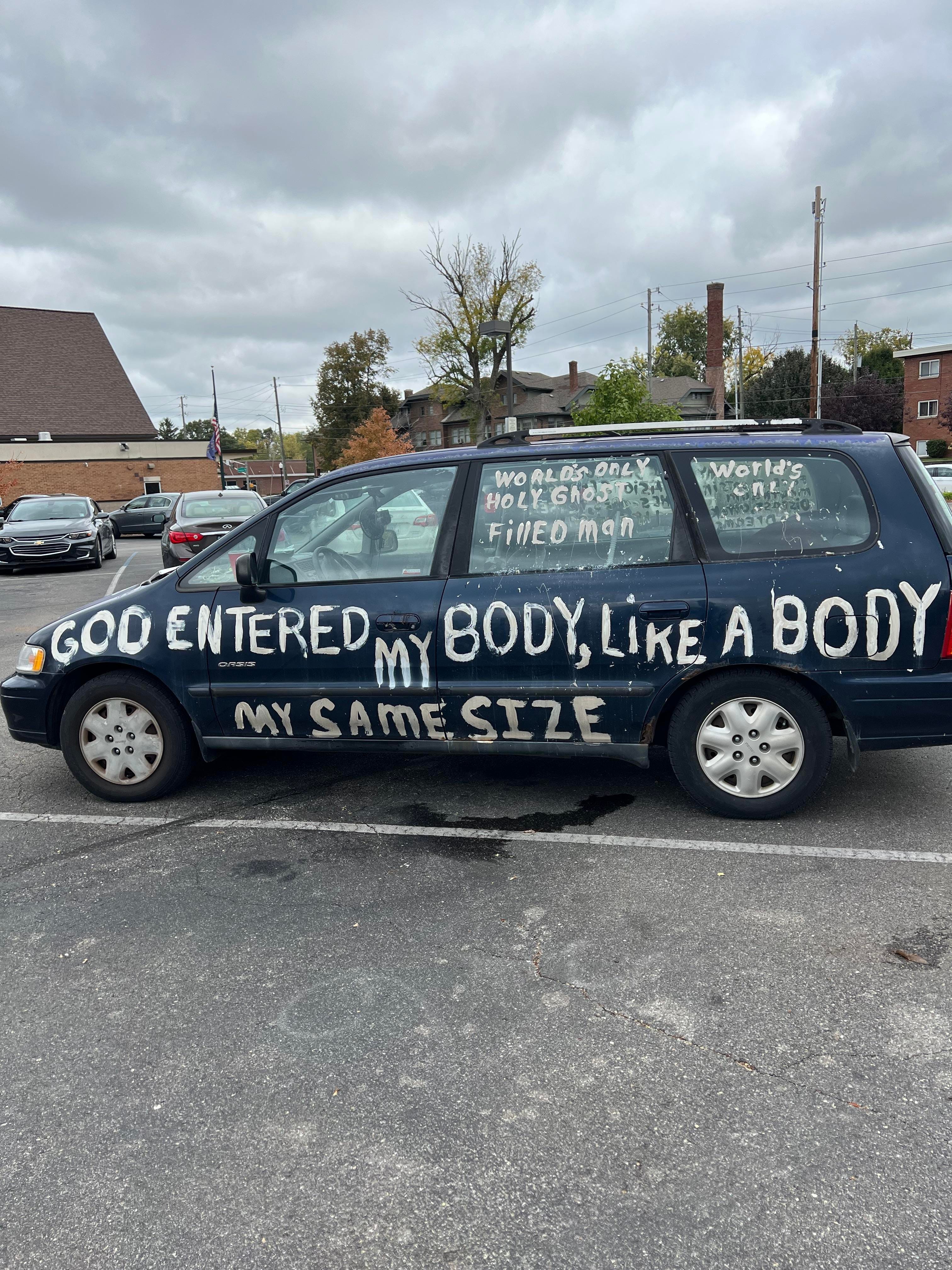
My introduction to ‘What It’s Like’ came from Wednesday’s ‘Fate Is…’ when Karly Hartzman explicitly references Arthur: the only reason I did it was to find out what it’s like. In the song, she draws on Flannery O’Connor’s 1952 novel Wise Blood which too, in other, un-God-like ways, shares in the pious feeling of lying in the tall grass. When the electric shock of someone-else-touching-you makes God enter your body (like a body the same size). It’s impossible not to believe in the potential of the moment, or in the potential of the entire world.
The song continues:
Oh give me the truth to me
And tell me of what I see
A feeling there must be an answer for me
I feel like I ache all over
Inside my heart is so, so troubled I feel like I could die
Oh is this what love’s supposed to be?
But I, I’m not one to gamble
And I don’t need to scramble
I didn’t know that love would strike me
But this is what it’s like
This is what it’s like
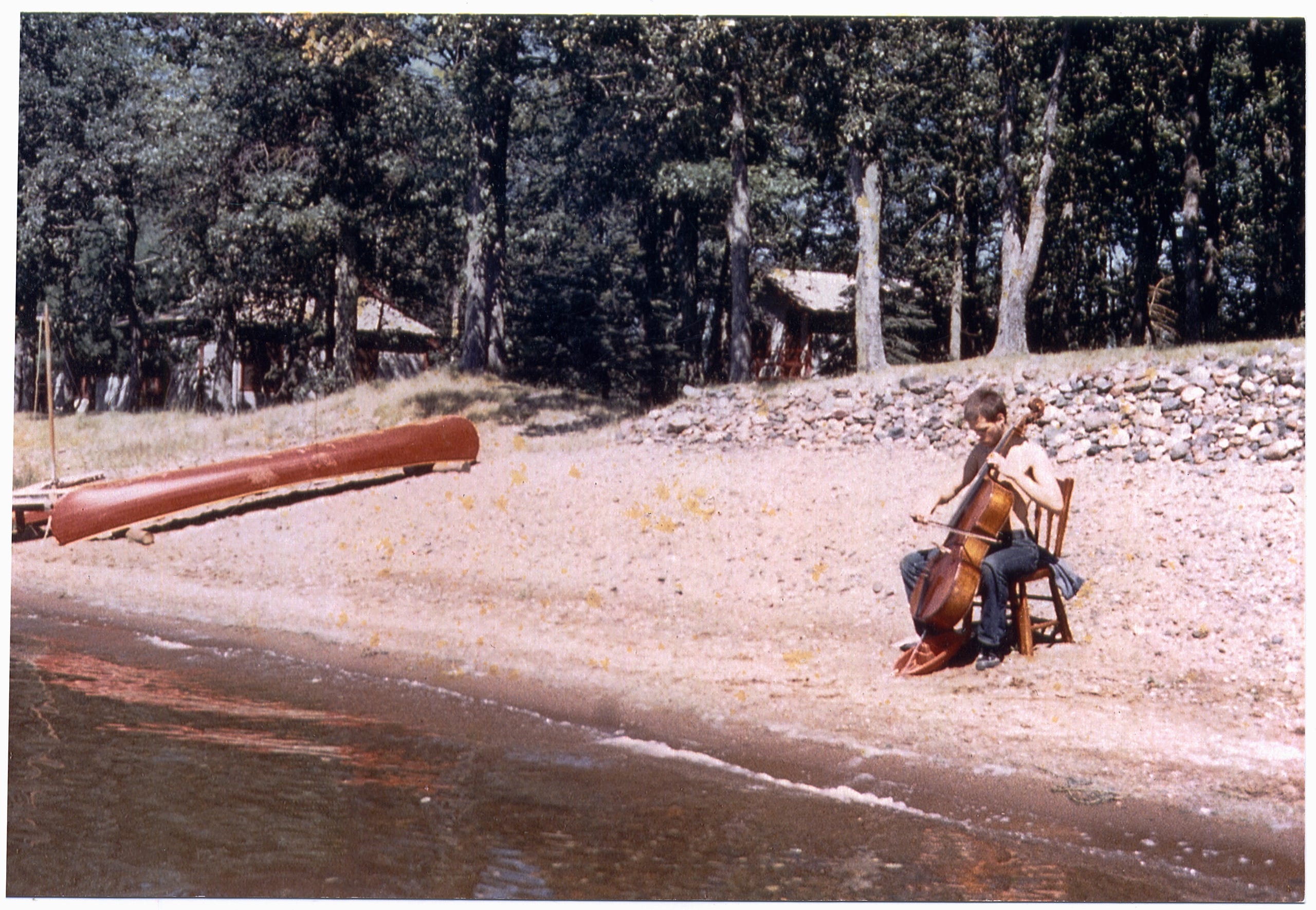
In the liner notes for Arthur Russell’s album, Love Is Overtaking Me, his partner Tom Lee writes:
“I met Arthur in 1978… East Village, six floor walk-up, no buzzer, key thrown down in a sock, battered door, rice and carrots steaming on the stove, blender whirling with an orange juice and soy concoction, dripping faucet, roaches scattering; loose floor boards, a multitude of metal milk crates used for books, records, tapes, even holding up a thin foam covered board for a couch; blue plastic cassette player, reel to reel tape machine, cello, keyboard, guitar; incense, meditation platform made from a shipping pallet, enclosed by hanging bamboo curtains, walls cracked and peeling, loft bed making room for more equipment scattered on floor and shelves below; windows looking out to the church across the street, electric cord slipping through the window down through the fire escape to [Allen Ginsberg]’s apartment a few floors below, allowing the refrigerator to hum, tape machines to roll, records to spin, clocks to turn; and then there was music…”
The circumstance of all this mess, the disharmony of Arthur’s apartment, is an unrelenting curiosity for the undiscovered, to find it and stake a claim to it; his music was ingrained in the organisation of his literal living. He kept trying to pry open this clamshell of pure sound in erratic spurts of noise-making.
Andy Beta, for Pitchfork, writes:
There was the world of Indian master-musician Ali Akbar Khan, in which Arthur used his cello to trance-inducing effect. There was the world where his cello shadowed the beat-poet Allen Ginsburg at readings, as well as the world of The Kitchen, where he premiered his peculiar minimal compositions while also rubbing elbows with composers like John Cage, Rhys Chatham, and Philip Glass. He was in the rock world, too, nearly joining the Talking Heads and forming the short-lived Flying Hearts with ex-Modern Lover Ernie Brooks. He even briefly produced quirky tracks in the rap world, frustrating young rapper Mark Sinclair who would one day go on to make it as the meat-headed action hero Vin Diesel.
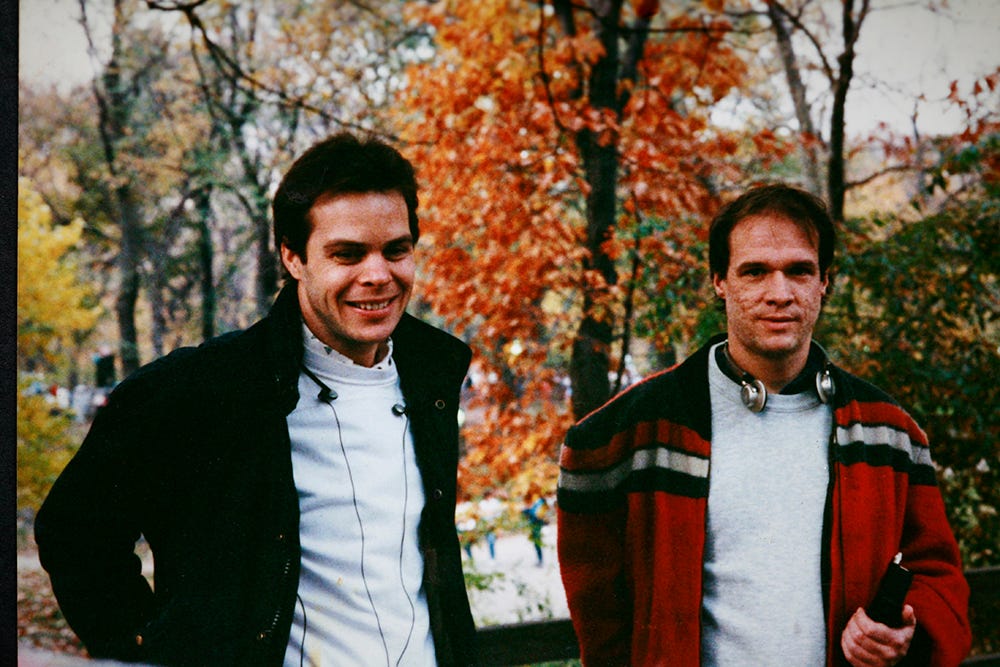
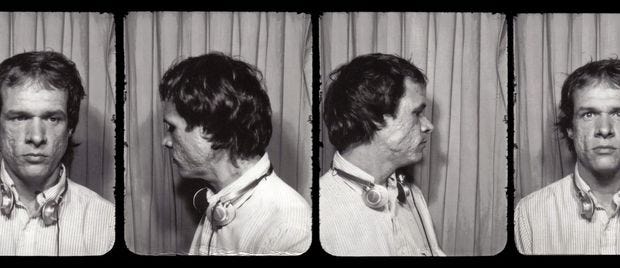
I look at Arthur’s face, all pockmarked with acne scars that he was ashamed of since childhood. The blender whirs into a symphonic declaration of love.
Alone in my room, I try to find the clamshell I’m longing to open. A tiny cow trinket, the size of a 50c coin, wearing sunglasses and lounging on its side, chuffed at its coolness sits along my windowsill; a postcard reprint of Piss Christ on the wall; a Bikini Kill ticket stub; a Tony Montana action figure which yells out a weak, electronic, “Say hello to my little friend” when you press the button. I can trace all of these objects through the interstices of memory and desire—but it’s also all just junk.
In the rupture of love, finding out what it’s like took the form of pathetic risks. Attracting one body to another, for a night, or for a couple of months. Ending up on the rooftop of Crown Casino, having gambled away the rest of my pay-check for the week because it meant impressing a girl. Spending the night at their house in Caulfield while dog-sitting for your mum down the road. The smell of chihuahua still lingers on my skin, all gravy and drool. You called me from Ramallah and I cried afterwards. Slaking my thirst on a couch in Preston. When we bump into each other at a gig, one of the first things I mention is how I’ve started watching The Sopranos again. I still haven’t properly flicked through my copy of A Ballad of Sexual Dependency which he gifted me over dinner at his house. That medium-rare rump, oil slicking his lips. I really thought I could love him. In many ways, I do, despite the very obvious ways I do not. Combatively, I tense my muscles, elongate my back; I make boy jokes. Say something about massive tits, you know. We’ve both had the experience of penetrating, I almost, menacingly, say to him, but I know he would find this funny. I would find it funny too.
When finding out what it’s like took the form of madness, I felt myself brutishly exposed to all of the dents in the armour of my body. The wound engulfed me. Screaming in front of strangers teaches you a thing or two about noise. We call them “episodes”. My body thrashes against asphalt. Take four beta blockers after some convincing and I curl my tail between my legs. My therapist has a couch in her room but I can never bring myself to lie against it. At my last appointment, after months of watching me, she revealed every habit of mine, ending with her eyes on my fingers. I watch you pick your skin raw every session, she says. I wipe the blood on my jeans. Over-medicated, I start to feel numb to all the declensions around me. I don’t care for finding out what it’s like anymore—I’ve discovered it all and now I’m tired. I am afraid of declaring myself naked in front of anyone.
I never stop tearing away at the inside, though I do it with less reasoning. So I begin burrowing myself into my work. The desire becomes misaligned somewhere in there.
On Sunday I read somewhere
That real love is heart and soul
Yeah, but only a master could understand that
I left that old magazine and walked out into the green of summer
I felt like I could cry
But in the grass I only sat
Well I, I’m not one to gamble
And I don’t need to scramble
I didn’t know that love would strike me
But this is what it’s like
This is what it’s like
In 1992, Arthur Russell died of AIDS, survived by his partner Tom. On May 21st, on what will have been Arthur’s 75th birthday, a remastered version of his album, Love Is Overtaking Me which features ‘What It’s Like’, will be released.
Every now and then I listen to him. I feel some sort of grief. I envisage myself in sixteen years — 40 years old, the age Arthur was when he died. What will my body look like then? Who will surround me? What else will I have risked? Memory will haunt me, knife-like and warm. I am unapologetic about this. I get to grow old under the youthful shadow of Arthur. I am only twenty-four and sometimes the desperate energy of myself returns—good.
In an interview, Tom Lee says:
I will admit that usually after I’ve responded to questions such as these, or hosted a new acolyte in the study of Arthur Russell I am exhausted. It brings me back to those days and I wish I could stay there. Soon after Arthur died, and he battled and suffered for a number of years, I would walk around the city, back and forth to work in SOHO, listening only to his music. I still hoped I would turn a corner and see his impish smile.
Finding out what it’s like is gratifying. When I think of the experience interwoven in my body, I think of the memory and knowledge crouching closely, potently, against my veins. I dispense this casually in conversation. Oftentimes, I keep it unknown. Let the story manifest itself when it needs to be manifested. I think of my teenage appeal to have something worthwhile for presentation—and I think of now, today, sitting here, in my house in North Melbourne, cat-proofing my home, writing this piece. I am without a six-month plan. When I was a child, I thought I should be married by now. Certainly, what all of this means is that, the curiosity will always be necessary and will always find me. I must overcome the hesitation. Let it swallow me whole. Say hello to my little friend, action-figure Tony Montana says, though unlike the movie, there is no immediate response of blazing guns. Instead, I get to hear the silence; I get to wonder what the response might be, I get to find it out for myself.
moving and lingering, as always, aeva <3